No retrieval grounding
Answers come from the model's memory, not your data — and they're confidently wrong.
We build the production system around your prototype — grounding, evals, fallbacks, cost control — and get you live in 8 weeks.
 Clutch
 DesignRush
 TopDevelopers
Products and teams we've engineered with














The Problem
When an AI product misbehaves, the instinct is a bigger or newer model. It rarely helps — because the failures users actually hit live in the engineering, not the model.
Answers come from the model's memory, not your data — and they're confidently wrong.
Every prompt tweak or model update can quietly degrade quality — nothing measures it.
One provider outage or rate limit and the feature simply stops — with no plan B behind it.
Token spend and response times look fine at 10 users — then both balloon at 10,000.
No traces, no alerts, no dashboards — failures stay invisible until a customer hits one.
It does nothing for any of the above. That's the gap — and it's an engineering gap.
The Self-Audit
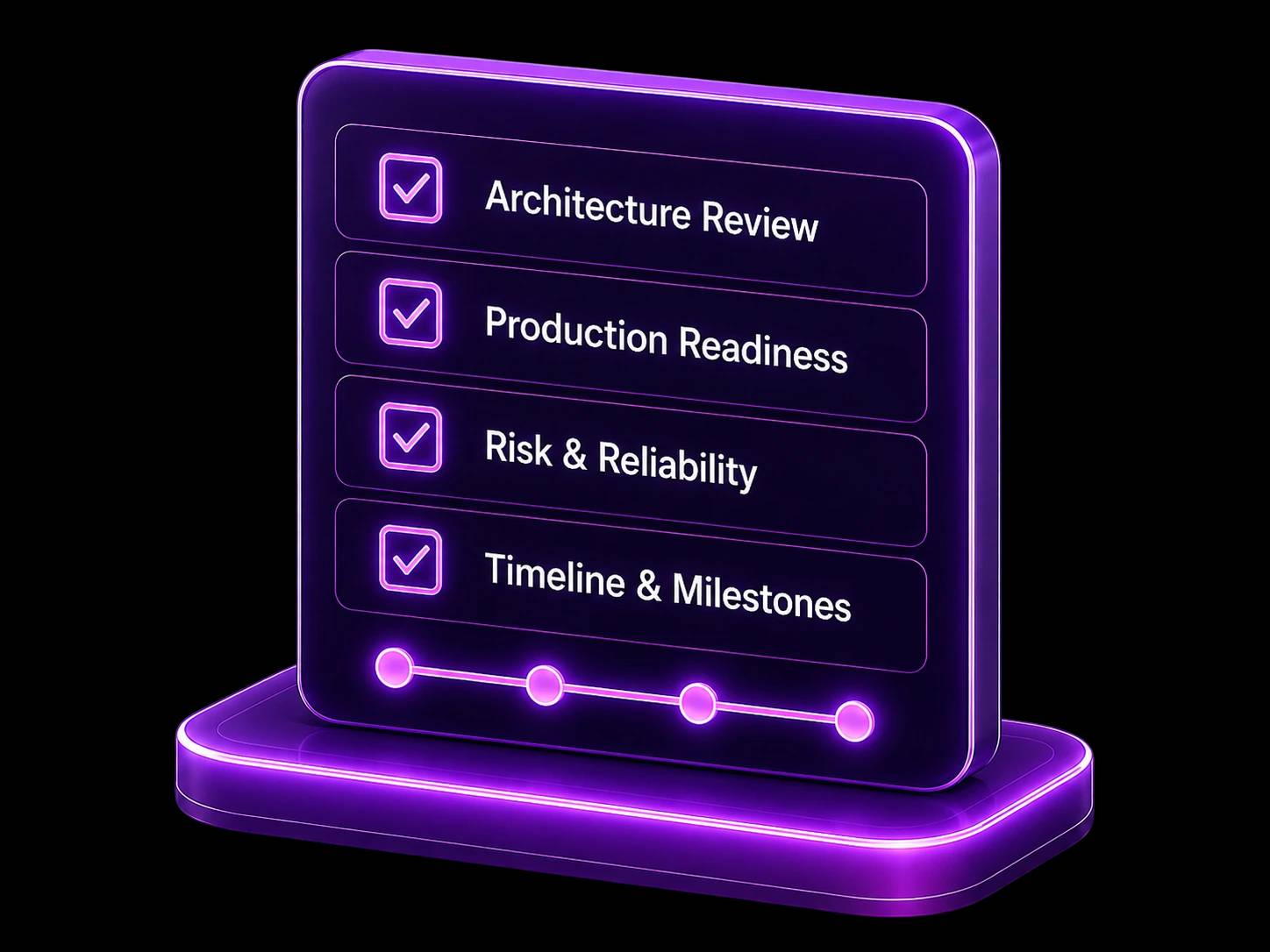
A sample of the 30-checkpoint self-audit our engineers run on every AI product. Try these ten on your own stack.
Download the full PDF and see how your product scores.
Case Studies
A look at what our engineers have taken all the way to production — live, scaled, and in daily use.
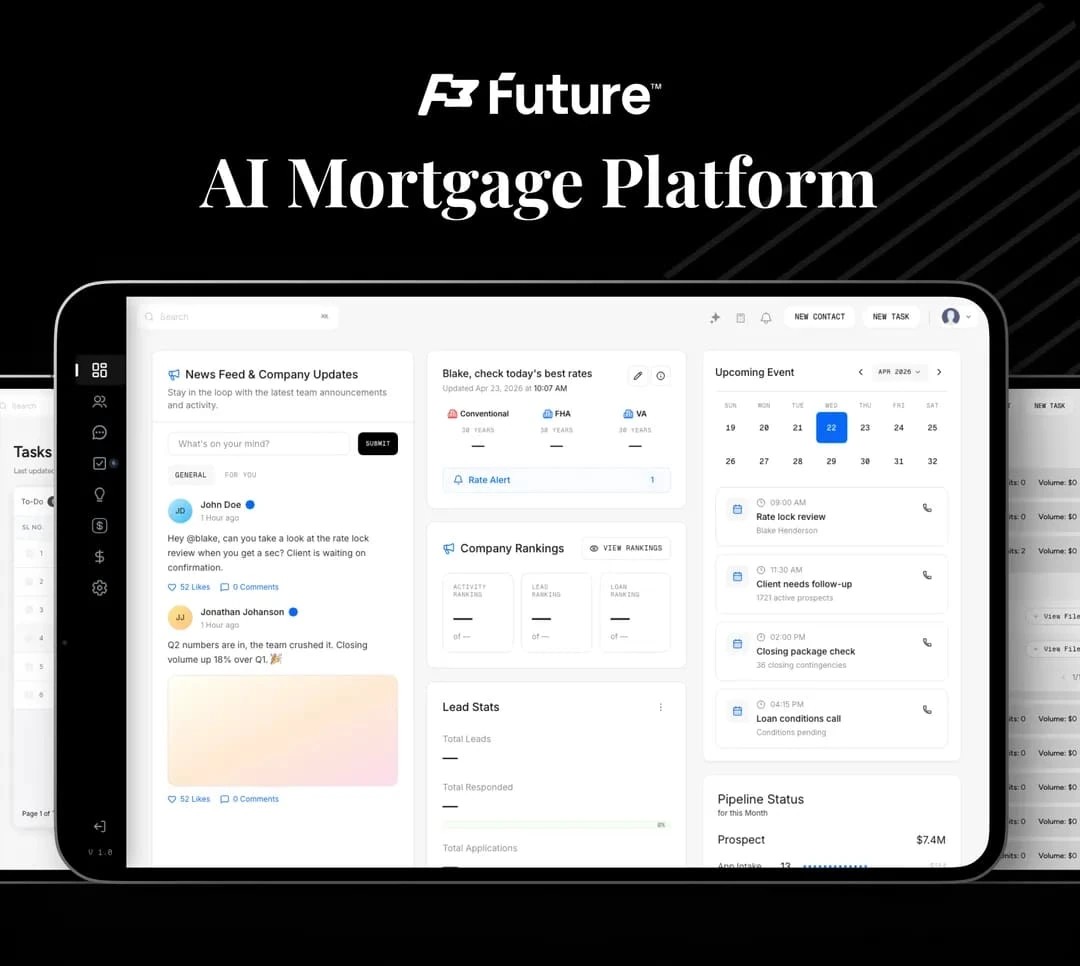
Future Mortgage
 United StatesFinTech
We built an agentic AI operating system for Future Mortgage that consolidated 12+ vendor portals, slashing loan pre-approvals and verifications from days to minutes.
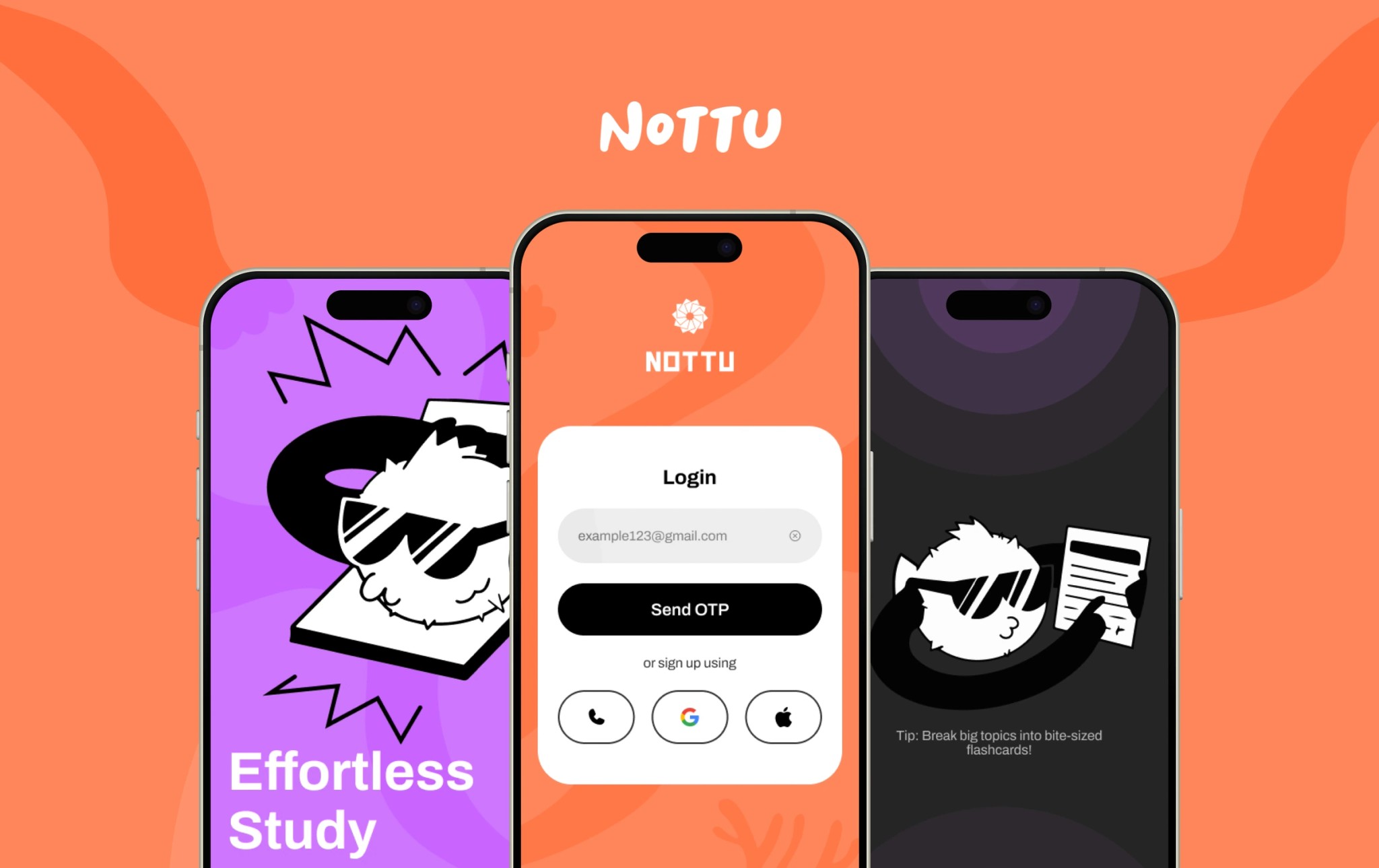
Nottu AI
 IndiaEdTech
Helping students reduce lecture stress and improve exam readiness through AI that turns every class into structured, revisable knowledge.
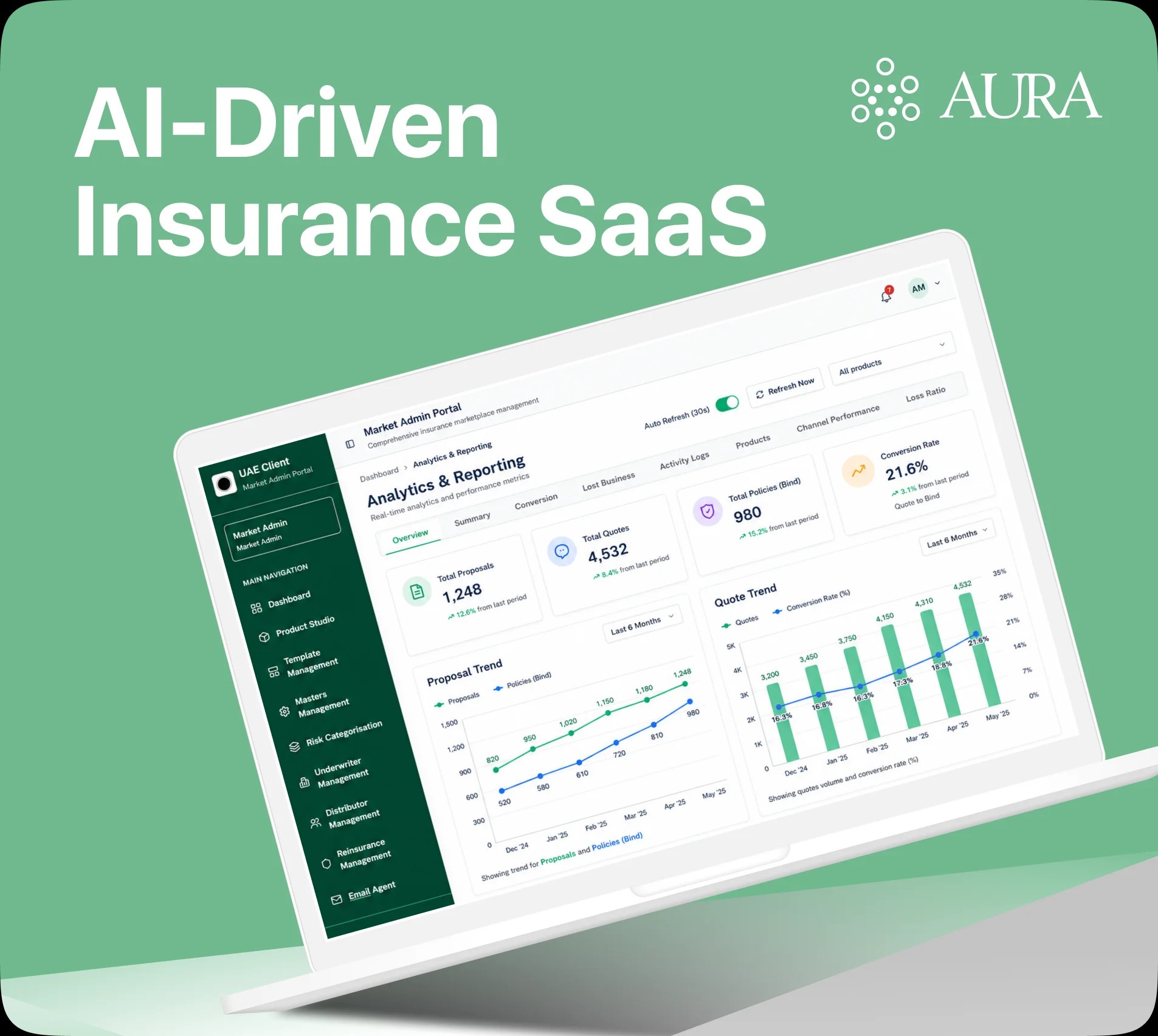
Aura P&C 360
 United Arab EmiratesInsureTech
Replacing paper-based underwriting and fragmented rating spreadsheets with a unified digital marketplace that connects brokers, insurers, and reinsurers.
By the Numbers
A senior engineer reviews how your AI product is built and walks you through what production will demand of it — with a rough path and timeline to get there. The findings are yours to keep, whoever you build with.
Claim Your Free Audit30 MINUTES · REAL ENGINEER · NO OBLIGATION
Warranty
90 daysAnything that breaks after launch in the first 90 days, we fix at no cost.
Overruns
On usWe cover the first 20% of any fixed-scope overrun ourselves.
Fit
2 weeksIf an engineer isn't the right fit, a replacement is on your project within two weeks — free.
Hire Them
6 monthsLove working with someone? After six months you can bring them in-house.


"They rebuilt our legacy government inspection system — new front-end, back-end, and a mobile app — well-versed across many technologies. Support requests dropped noticeably after the upgrade."
Read Case Study →

"Appening handled almost every part of the product, front-end, back-end, the admin console, even our website and one-pager. There were revisions along the way, and the team stayed responsive through all of them and delivered exactly what I had envisioned."
Read Case Study →


"They helped us strengthen our tech stack and build a scalable web app, handling the Angular front-end across 15-day sprints. The team was flexible and improvised with their own ideas, and we launched on time with the features we needed."
Read Case Study →

"Their QA engineer embedded in our DevOps team and owned end-to-end testing of a solar design & sales platform — manual each sprint plus automation scripts. Post-release defects dropped 50%, and regression went from 3 hours to 15 minutes."
View Live →

"Appening is our technology partner — they built our Resumod SaaS resume builder from the ground up and still handle all the development as we keep evolving it. They always bring real input, and that trust is why I keep going back."
Read Case Study →
"Appening became our technical team — a returns app that finds the nearest service center via Google Maps, OCR label scanning that generates invoices, and a driver pickup app, all in Flutter and React.js."
Read Case Study →
"They rebuilt FN Perfumes' e-commerce site from scratch in React, fully responsive, and added a driver app for the online store. Our conversion rate rose significantly, lifting online sales and paid-ad results."
Read Case Study →
"They took our health marketplace from prototype to a production-ready MVP, with a project manager coordinating and direct access to the developers over Slack. The team even adapted to build for our American audience."
Read Case Study →
"They built our online transportation platform phase by phase, delivering on time and at great quality, and stayed available around the clock to fix any issue. Their skill set and communication are hard to find nowadays."
Read Case Study →"They rebuilt our legacy government inspection system — new front-end, back-end, and a mobile app — well-versed across many technologies. Support requests dropped noticeably after the upgrade."
Read Case Study →"Appening handled almost every part of the product, front-end, back-end, the admin console, even our website and one-pager. There were revisions along the way, and the team stayed responsive through all of them and delivered exactly what I had envisioned."
Read Case Study →"They helped us strengthen our tech stack and build a scalable web app, handling the Angular front-end across 15-day sprints. The team was flexible and improvised with their own ideas, and we launched on time with the features we needed."
Read Case Study →"Their QA engineer embedded in our DevOps team and owned end-to-end testing of a solar design & sales platform — manual each sprint plus automation scripts. Post-release defects dropped 50%, and regression went from 3 hours to 15 minutes."
View Live →"Appening is our technology partner — they built our Resumod SaaS resume builder from the ground up and still handle all the development as we keep evolving it. They always bring real input, and that trust is why I keep going back."
Read Case Study →"Appening became our technical team — a returns app that finds the nearest service center via Google Maps, OCR label scanning that generates invoices, and a driver pickup app, all in Flutter and React.js."
Read Case Study →"They rebuilt FN Perfumes' e-commerce site from scratch in React, fully responsive, and added a driver app for the online store. Our conversion rate rose significantly, lifting online sales and paid-ad results."
Read Case Study →"They took our health marketplace from prototype to a production-ready MVP, with a project manager coordinating and direct access to the developers over Slack. The team even adapted to build for our American audience."
Read Case Study →"They built our online transportation platform phase by phase, delivering on time and at great quality, and stayed available around the clock to fix any issue. Their skill set and communication are hard to find nowadays."
Read Case Study →Bring whatever you have — a Lovable prototype, a half-shipped MVP, a demo that keeps stalling. You'll walk away knowing exactly what it needs.
The Difference
It gives a good answer when you run the demo script — nothing checks how it does on everything else.
Every change is scored against test cases, and anything that makes answers worse is blocked before it ships.
When the model provider has an outage or slows down, your users see an error page.
If a provider fails, the system retries or switches to a backup — your users never notice.
You find out what the AI usage cost when the invoice arrives at month-end.
AI spend is tracked in real time, with budgets and alerts before costs climb.
Answers come from whatever the model memorized in training — plausible, but not verifiable.
Answers are pulled from your own documents and cite their sources, so they can be verified.
There's no way to detect that something broke — you find out when a customer reports it.
Dashboards and alerts show your team what's happening before customers feel it.
How the system works lives in the head of whoever built it — nothing is written down.
Decisions are documented, every type of failure has a written step-by-step fix, and your team is trained to run it without us.
How We Work
Four stages, each with a deliverable you can hold us to — and the discipline that makes the speed safe.
We map the fragile points in your build and what production will actually require of it.
Week 1Grounding, fallbacks, evals, cost and latency controls — the plumbing demos skip.
Week 2-4Real data, real load, with observability designed in from day one.
Week 4-7Documentation, dashboards, and knowledge transfer so your team owns it.
Week 8Speed without rigor is just faster failure. AI compresses our timeline — the testing, security, and architecture stay non-negotiable.
Why Appening
Playbooks don't ship products. Engineers do — and ours have shipped enough AI-native systems to know exactly where they break.
RAG pipelines, agent frameworks, and eval harnesses are our engineers' everyday tools — patterns hardened across the 100+ products we've shipped, not learned on your budget.
Senior engineers lead every engagement — they design the architecture, own the evals, and work inside your sprint cadence from day one.
Everything ships with the docs, dashboards, and tests your team needs to operate it independently. You own the code and the know-how.
Let's Talk
Tell us about your build and where it's stuck — or skip the form and grab a slot directly. Either way, a senior engineer replies, not a sales rep.
Book a 30-Min Call
Product Manager at Helloverify
“It was easy to communicate our ideas to the team. The team was very co-operative and was very flexible. The team even improvised on lots of areas with their ideas. It was easy to communicate our ideas to the team.”
Trusted by companies building the future
FAQ
Rarely. Most production failures — wrong answers, downtime, runaway cost — come from missing engineering (grounding, fallbacks, evals, monitoring), not the model. A better model improves the demo, not the reliability.