 United StatesAI
 AI
AIAgentic Experience Optimisation for Online Stores

See how AI agents shop your store
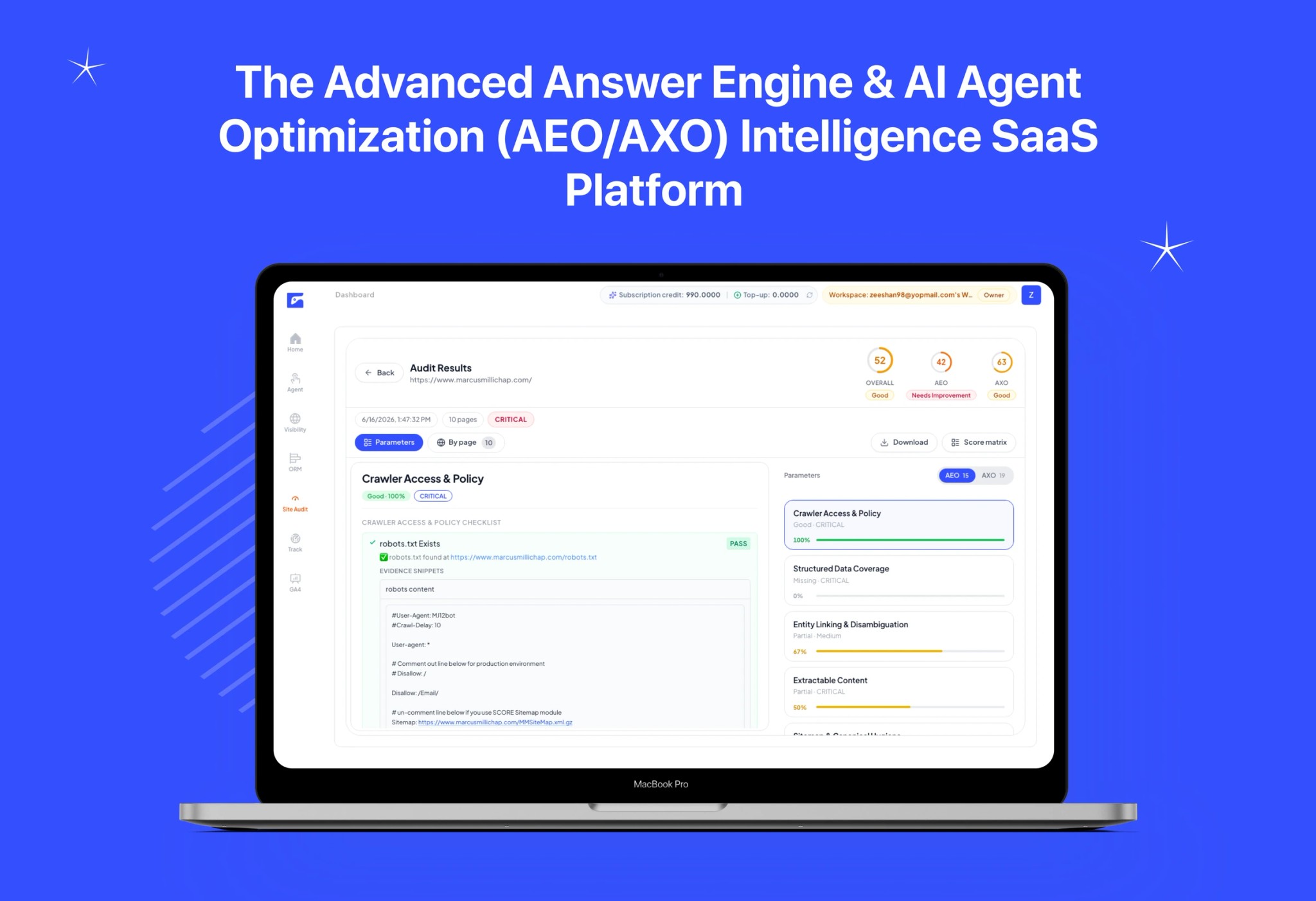
Geck is an agentic-commerce intelligence platform built for a web where AI agents — not just humans — increasingly browse, compare, and check out on a shopper's behalf. Appening partnered with Geck to design and engineer the entire product: an executive analytics dashboard, a deep-crawl audit engine that scores sites on 15 AEO and 19 AXO parameters, an autonomous agent simulator that runs real agents (ChatGPT Atlas, Perplexity Comet, and others) through live store flows, a sub-3KB tracking pixel that separates agent traffic from human, and the cloud-native backend that ties it all together. The outcome is a single platform that shows brands exactly how AI agents experience their site — and what's silently costing them sales.
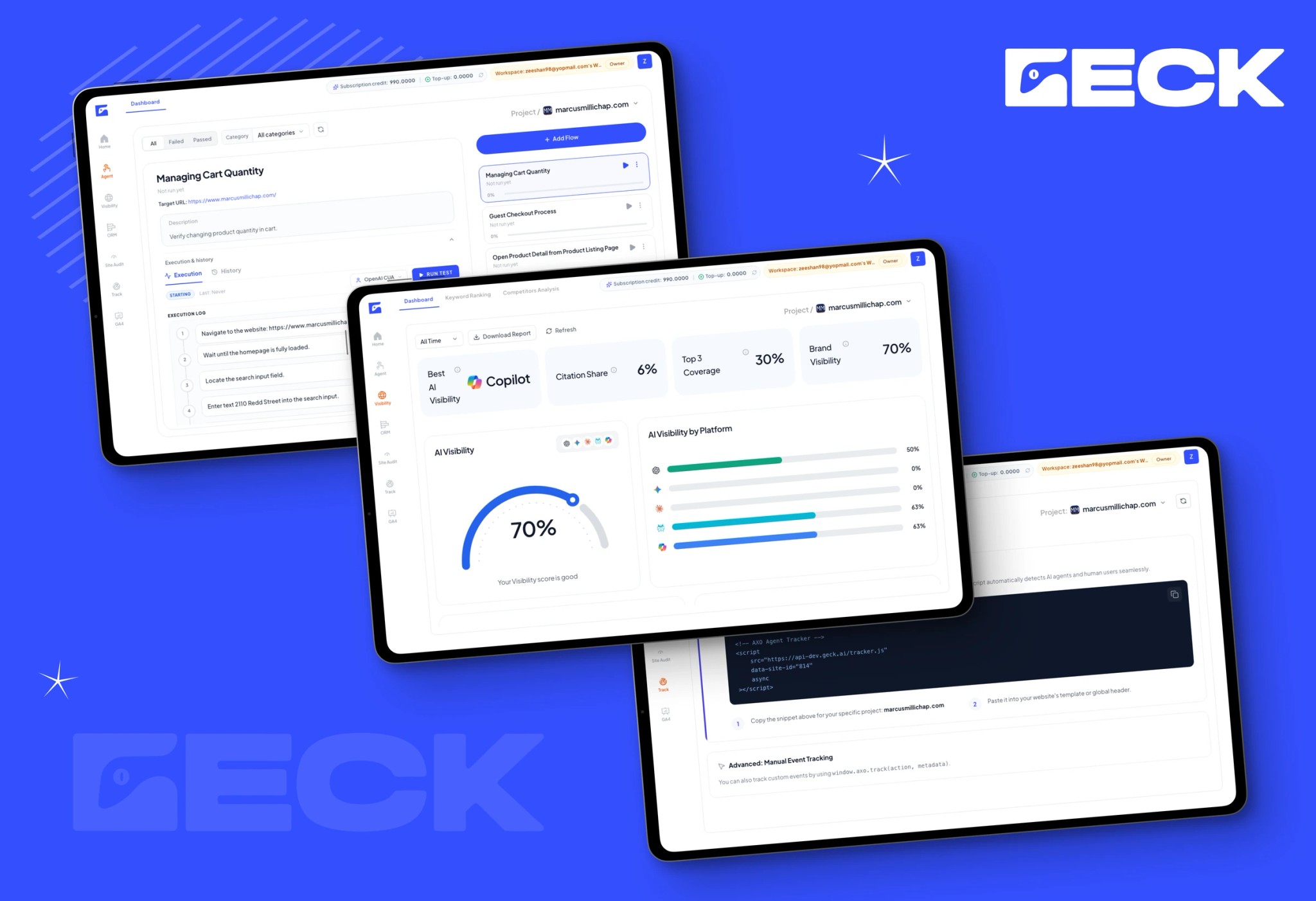
Agent shoppers failing checkout, invisibly
Commerce is going through its biggest shift in 25 years, and most online stores are blind to it. Shoppers are handing tasks to AI agents — find this, compare that, add to cart, check out — and those agents make buying decisions in milliseconds.
But stores were built for human eyes, not autonomous code. Agents can often find a brand yet fail the moment they try to act: broken DOM selectors, CAPTCHA walls, bot blocks, fragile checkout flows, and missing structured data quietly kill transactions a human would have completed.
None of it surfaces in Google Analytics, which can't even tell agent traffic from human — so the revenue leak is invisible, and stores lose high-intent, high-AOV agent shoppers without ever knowing it happened.
The discoverability layer is shifting in parallel: as buyers ask ChatGPT, Gemini, and Perplexity for recommendations instead of scrolling search results, brands that aren't cited simply don't exist. And quantifying any of this was nearly impossible — there was no score, no diagnostic, no way to watch an agent attempt a purchase and see precisely where it broke.
Every month without that visibility, competitors who get agent-ready first lock in a lead that compounds.
Agent-ready storefronts brands can measure
In just 12 weeks, Appening took Geck from concept to a production-ready beta — turning an invisible, unmeasurable problem into something brands can finally see, score, and fix:
- The revenue leak became visible: Brands can now watch real AI agents attempt checkout, login, and search on their own store and see exactly where each one breaks — failures previously hidden from analytics are mapped, quantified, and tied to lost GMV.
- "Are we agent-ready?" got a number: Every store gets a 100-point AXO score and a prioritized, engineer-ready list of fixes, replacing guesswork with a backlog ranked by revenue impact.
- Agent traffic stopped hiding inside human traffic: A lightweight pixel separates AI bots from real visitors in real time, giving teams their first true read on how much of their traffic — and revenue — is already agentic.
- Discoverability is measured alongside transactions: Brands can see where they're cited or missing across ChatGPT, Gemini, Perplexity, and others — fixing being found and being bought in one place.
- It holds up at enterprise scale: The platform ingests 1M+ tracking events a day with zero dashboard lag and charts that render in under 150ms — proof it was engineered to production standard.
Inside Geck
Explore the key modules and capabilities we designed and built. Select one to see what it does.
AXO Dashboard
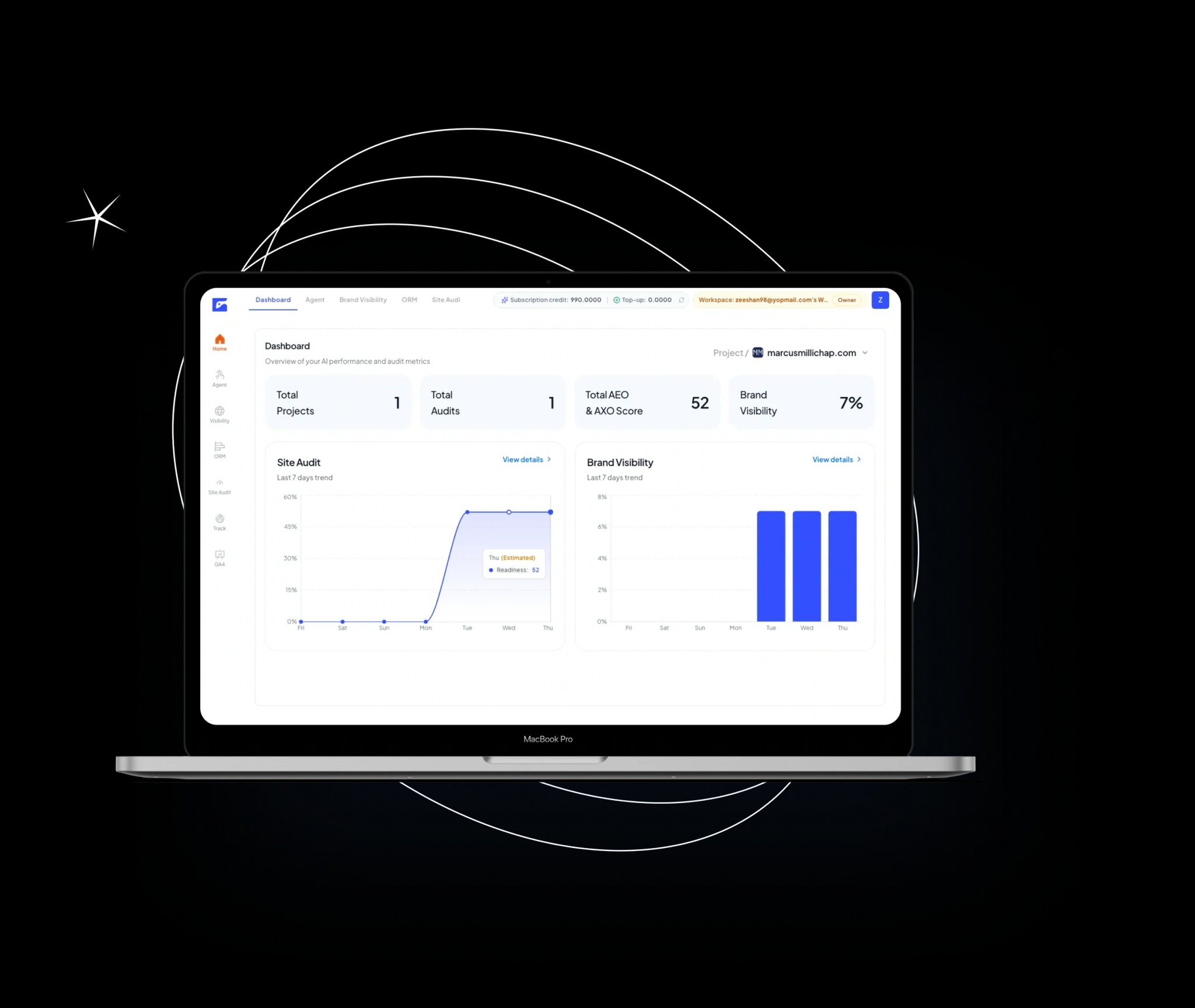
<p>The core cockpit of Geck provides marketing leaders with an aggregate overview of their brand's footprint in the AI-search ecosystem. It consolidates metrics across multiple domains into a single pane of glass, highlighting Total Projects, Total Audits, Average AEO/AXO Scores, and overall Brand Visibility (Citation Share).</p><p>To maximize user engagement, we designed a responsive dual-grid layout featuring SVG trend lines that track site audit readiness and brand citations over 7-day windows. This dashboard allows marketing teams to immediately quantify the impact of their optimization campaigns.</p><p><strong>Value-Add:</strong> Built using a modular Next.js architecture with optimized state management, ensuring real-time charts load in under 150ms even when querying datasets containing millions of historic visibility events.</p>
A real-time pipeline built for millions of events a day
To build a high-performance, real-time analytics suite, our engineering team designed and deployed a cloud-native SaaS architecture that processes millions of event payloads daily. The pipeline is structured as follows:
- Event Ingestion Pipeline: Lightweight Javascript tracking pixel pushes client-side traffic data via load balancers to a FastAPI collector.
- Queue & Stream Broker: Message broker pipelines Kafka and Redis buffer event traffic streams to guarantee lossless delivery.
- ClickHouse Database: Column-oriented database structure maintains highly indexed analytics events for instantaneous reporting queries.
- Headless Worker Clusters: Playwright and Puppeteer worker threads orchestrate deep-crawls and run automated script executions.
Geck is an AI-powered platform for website optimization, automated testing, and brand intelligence — covering AXO (Agent Experience Optimization), AEO (Answer Engine Optimization), AI-driven audits, browser automation, ORM, content generation, and analytics.
AI Stack
 OpenAI
 Anthropic
 LangChain
 Langfuse
 pgvector
 Redis
Redis Playwright
 Browserbase
Backend
 Node.js
 NestJS
 TypeORM
 PostgreSQL
  BullMQ
 Socket.IO
Frontend
 Next.js
 React
React TypeScript
Third-Party Integrations
 Google Analytics
 Google PageSpeed
  Google OAuth / APIs
  Firebase Admin
 Stripe
 Shopify
  PostHog
  DataForSEO
  Wextractor
Browser Automation & Testing
 Puppeteer
 VS Code Extension / CLI
Looking to start your own commerce-AI product?
Contact our e-commerce domain experts. Whether you're launching a first version or scaling a full platform, we'll help you design, engineer, and ship it.
Contact Our Experts