“Everyone’s a builder now.” It has become the rallying cry of the AI era, and there is a lot of truth in it. Vibe coding, no-code agents, AI-generated apps — the barrier to turning an idea into working software has never been lower. For anyone who has spent years helping founders get from idea to launch, this is genuinely exciting. More people can make more things, and many of those things would never have existed otherwise.
There is a part of this story, though, that gets far less attention than it deserves. Building has been democratized. Maintenance has not.
The gap between building and keeping
It is easy to hand someone the ability to build. The tools do that on their own now. It is much harder to hand someone the ability to keep what they built running well as it grows, changes, and meets real users. Those are different skills, and only one of them has been made abundant by AI.
We have watched this pattern play out with clients more than once. The prototype gets built over a weekend and it looks great. Then the cleanup takes months. The gap between “it works on my screen” and “it works reliably for everyone, and we can safely change it next quarter” is where the real cost lives, and it rarely shows up in the excitement of the first demo.
Where the debt quietly accumulates
When a working prototype appears in a few hours, it is tempting to keep going in the same mode — add another feature, then another, until the token budget runs out and the project is handed off with a quiet “good luck.” The problem is that the code underneath was written to prove an idea, not to be lived with. Left unexamined, it turns into debt that someone pays down later, usually at a worse time and a higher price.
Two questions tend to separate the teams that stay ahead of this from the teams that get buried by it.
The first is whether there are guardrails that stop prototype-grade code from quietly making its way into production. Prototype code is a wonderful thing in its place. It becomes a liability the moment it slips into the system real users depend on without anyone deciding, on purpose, that it is ready. A clear line between “this was built to explore” and “this is built to keep” is one of the most valuable boundaries a team can hold.
The second is who owns the abstraction layer that keeps the whole thing from spiralling. As a product grows, something has to hold its shape — the shared structure that lets new features slot in without every addition making the next one harder. That ownership does not appear on its own, and AI will not volunteer it. It is a human responsibility, and naming who holds it early is what keeps a fast-moving codebase from turning into a tangle no one wants to touch.
Engineering culture is the deciding factor
This is the heart of it. AI gives almost everyone the power to build. What decides whether that power creates lasting value or just creates debt is the engineering culture around it — the habits, standards, and judgment that a team brings to the code an AI helps them write.
A team with that culture treats a fast prototype as a beginning: something to learn from, then to harden deliberately if it earns the right to stay. A team without it treats the prototype as the finish line, and inherits the maintenance bill without having planned for it. The tools are the same in both cases. The outcome is not. This is the same idea we explored in moving from vibe coding to production-ready AI: the model is rarely the constraint, and the people and their standards usually are.
None of this is an argument for slowing down. The speed AI gives you is real and worth using fully. It is an argument for spending a little of that speed on intent — on deciding, deliberately, which code is meant to last and who is responsible for keeping it coherent.
How we approach it at Appening
The way we tend to work is to let prototyping run fast at the front of a project and then bring real engineering discipline to bear the moment an idea is worth keeping. That means drawing a clear line between exploration and production, owning the structure that holds a growing product together, and making sure the code we leave behind is code a team can understand and change without fear.
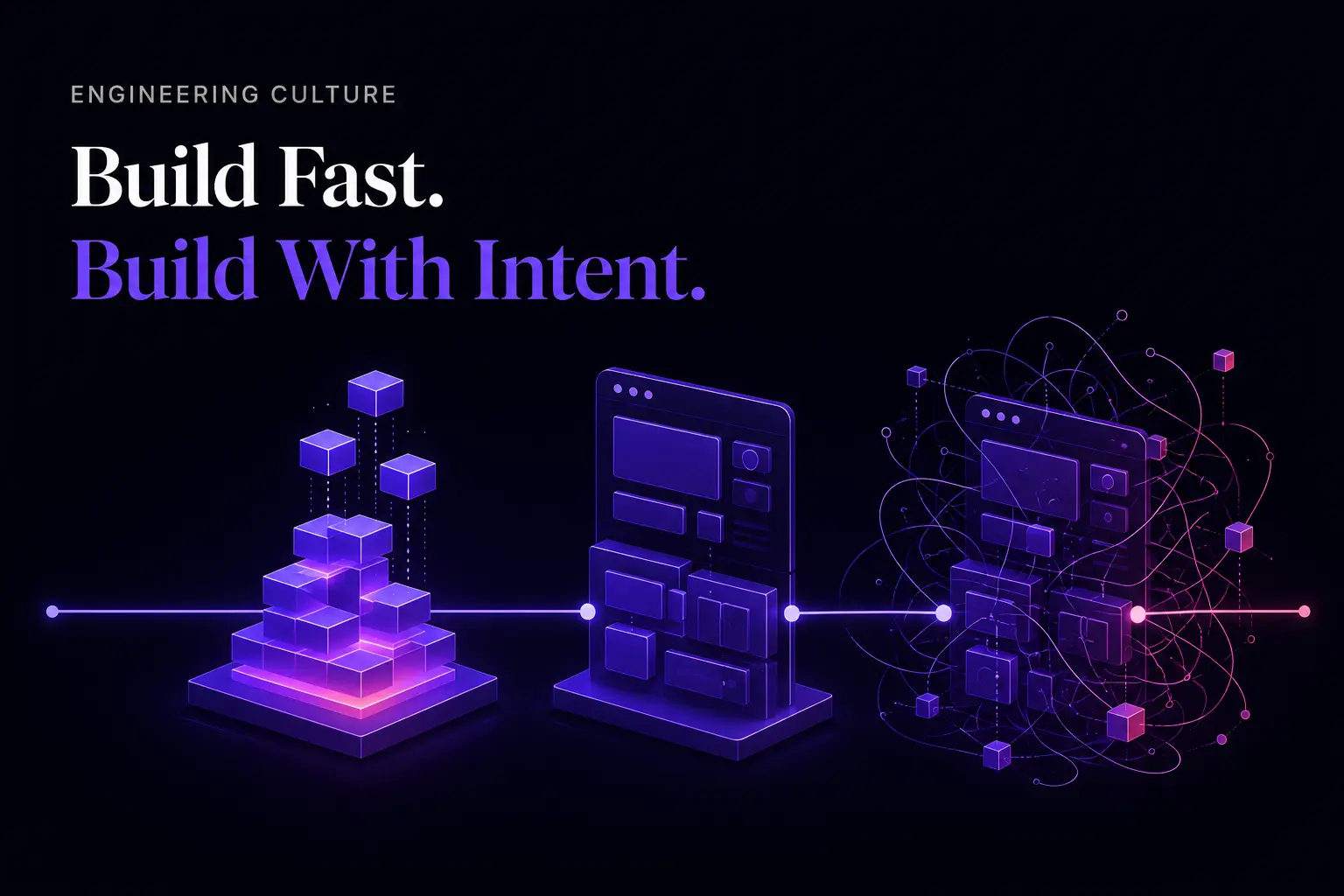
The goal is simple to state and harder to live by: build fast, and build with intent. The speed is what gets you to a good idea quickly. The intent is what makes sure that idea is still an asset a year later rather than a bill.
If you are building quickly with AI and want to make sure you are creating value rather than quietly accumulating debt, we are happy to help you put the right guardrails in place. Book a free 30-minute consultation and we will look at where your prototypes can move fast and where a little engineering discipline will save you months later.
Table of Contents